
How Executives Get Noticed for Global Roles
Samuel led supply chain operations across three African markets but had never worked with a multinational headquartered outside the continent. Once his LinkedIn and CV spoke the language of global mandates: cross-border compliance, multi-currency budgets, matrixed reporting two international recruiters reached out within a month, without him changing anything about where he lived or worked.
The demand is real, and growing fast
International hiring interest in African talent is accelerating: 2025-2026 reporting puts the share of international companies actively hiring remote workers from Africa at around 63%, with some analyses tracking year-on-year growth in this hiring at over 800%. This isn’t charity or a cost play alone — multiple 2025 reports point specifically to strong English proficiency, rising tertiary education numbers (enrolment across Africa has roughly doubled over the last 15 years, according to UNESCO data), and a growing base of professionals with genuine multinational corporate experience.
What’s shifting is also the type of role on offer. Recent coverage of South Africa’s remote talent market, for instance, notes employers increasingly hiring African professionals into genuine leadership and decision-making roles not simply task-execution or support functions specifically because candidates bring proven people-management experience from major global employers already operating on the continent.
PRO TIP: If your CV lists your job scope the way your current company internally describes it, rewrite it the way a global employer would need to see it — currencies, countries, regulatory bodies, and reporting lines spelled out explicitly.
Translate local scale into global terms
“Managed a $40M portfolio across three countries” reads as global scale wherever you’re actually based. “Managed logistics for the region” does not even if the underlying work is identical. Global employers are scanning for evidence of complexity: multiple markets, currencies, regulators, and cultures, not a specific location.
Get visible in global professional communities
Webinars, LinkedIn groups, and sector associations with international membership put you directly in front of the audience you’re trying to reach, rather than relying entirely on recruiters to find you through search alone.
Highlight cross-border and cross-cultural experience explicitly
Global employers filter for this directly in their search criteria — don’t leave them to infer it from a list of local job titles. If you’ve operated across multiple regulatory environments, currencies, or cultural contexts, state it as its own line item, not a buried detail.
Target multinational subsidiaries operating in Africa first
They are a proven, lower-friction bridge into fully global roles you gain direct exposure to international reporting structures and ways of working, without needing to relocate or take the leap into an unfamiliar company culture all at once.
THE MISTAKE WE SEE MOST OFTEN: Professionals assume global recruiters will read between the lines of a locally-scoped CV and infer the complexity of the work. They won’t and in a search dominated by keyword and criteria matching, an under-described role effectively doesn’t exist to the system doing the filtering.
Global employers aren’t looking for a passport they’re looking for evidence you can operate across complexity, and many African professionals already have more of that evidence than they give themselves credit for.
Ready to take the next step in your career?
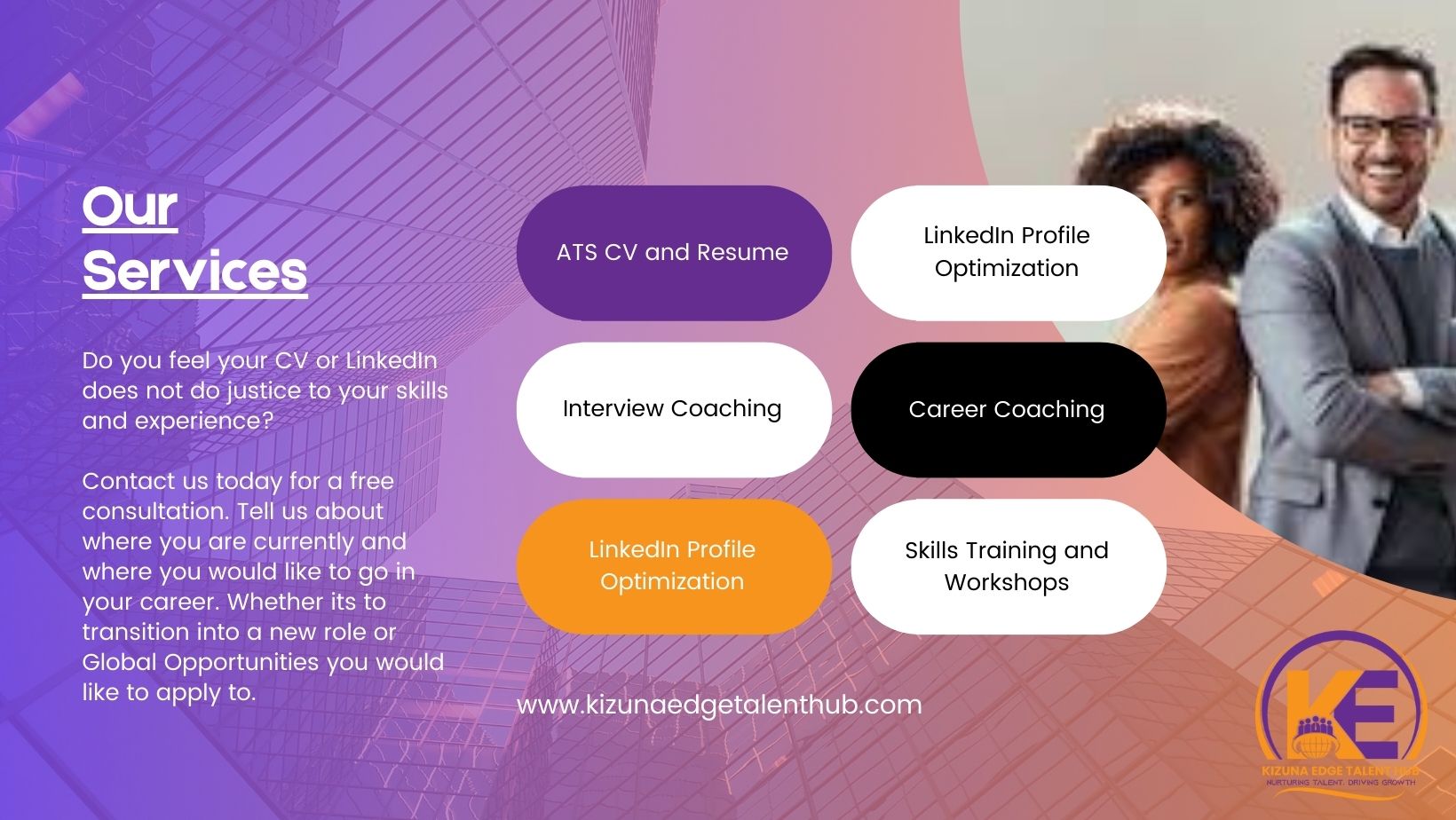
KETH Africa (Kizuna Edge Talent Hub) helps African professionals build CVs, LinkedIn profiles, and career strategies that open doors to executive and global opportunities.
Email: kethafrica@gmail.com | info@kizunaedgetalenthub.com
WhatsApp/Call: 0742118284
Join our career community: https://forms.gle/pJZXzQznoxrDPGam9
#jobsinafrica #cvwritingservicesinkenya #linkedinrevampservicesinkenya
Discover more from Kizuna Edge Talent Hub
Subscribe to get the latest posts sent to your email.